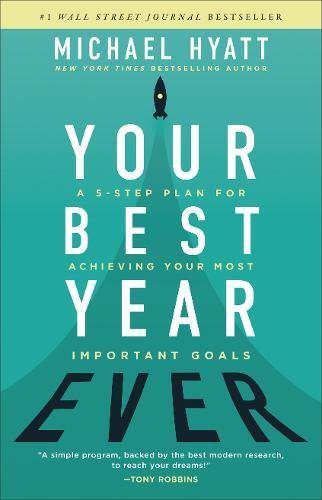
In Your Best Year Ever: A 5-Step Plan for Achieving Your Most Important Goals, NYT Bestselling Author and Speaker Michael Hyatt describes a five step process for setting and achieving goals. The 5 Steps are: Believe the Possibility, Complete the Past, Design your Future, Find Your Why and Make it happen.
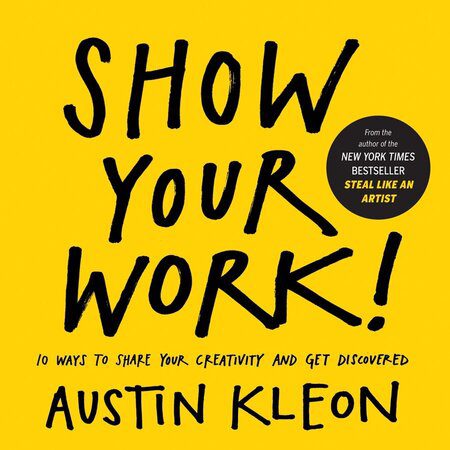
In Show Your Work!: 10 Ways to Share Your Creativity and Get Discovered, author Austin Kleon writes about self-promotion, thinking about your work as a never-ending process, how to share your process in a way that attracts people who might be interested in what you do, and how to deal with the ups and downs of putting yourself and your work out in the world.
Show Your Work is a list of 10 ways to share your creativity and get discovered in the process. The big idea of the book is that creativity is about the process and not the product. By sharing your process openly, you can build an audience that you can use to gather feedback, make a personal and professional connection or patronage.
The Web’s Lesson: When Something Halves in Price Each Year, Zero Is Inevitable.
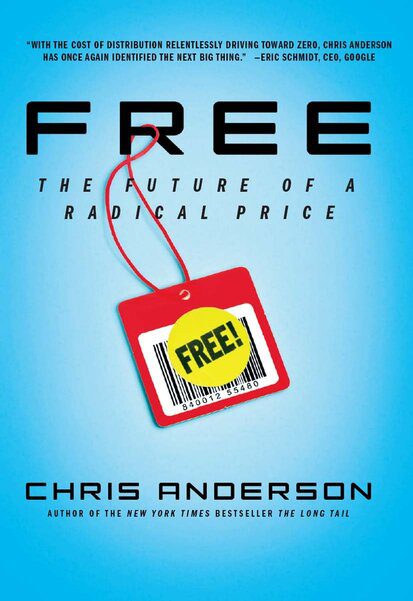
In Free: The Future of a Radical Price, English-American author, entrepreneur and former Editor in chief of Wired magazine, examines the freemium strategy where products and services are initially given to customers for free, and how businesses can profit more in the long run.
The costs associated with the growing online economy are trending toward zero at an incredible rate.
Anderson argues that in many instances businesses can profit more from giving things away than they can by charging for them. Far more than a promotional gimmick, Free is a business strategy that may well be essential to a company’s survival.
Steal Like an Artist: 10 Things Nobody Told You About Being Creative is a manifesto for creativity in the digital age. In 2011, Kleon was asked to address college students in upstate New York, he shaped his speech around the ten things he wished someone had told him when he was starting out.
I am a super fan of the Masters of Scale podcast hosted by Reid Hoffman (founder of LinkedIn, investor at Greylock). In each episode of the podcast, Reid interviews visionary leaders and founders, distilling the strategies that power their company’s growth.
In Masters of Scale: Surprising Truths from the World’s Most Successful Entrepreneurs, teams up with Masters of Scale’s executive producers to offer a rare window into the entrepreneurial mind, sharing hard-won wisdom from leaders of iconic companies (including Apple, Nike, Netflix, Spotify, Starbucks, Google, Instagram, and Microsoft) as well as the bold, disruptive startups (such as 23andMe, TaskRabbit, Black List, and Walker & Co.) that are solving the problems of the twenty-first century.
Each chapter identifies one of ten key themes that carry you through the entrepreneurial journey. The journey begins with surprising ways to surface and recognize your big idea, then proceeds to some of the early-stage challenges of building and funding a new venture, a period when you must do things that don’t scale now in order to scale later.
Each chapter identifies one of ten key themes that carry you through the entrepreneurial journey. The journey begins with surprising ways to surface and recognize your big idea, then proceeds to some of the early-stage challenges of building and funding a new venture, a period when you must do things that don’t scale now in order to scale later.
Our chief want in life is somebody who will make us do what we can. – Ralph Waldo Emerson
In Swim!: How a Shark, a Suckerfish, and a Parasite Teach You Leadership, Mentoring, and Next Level Success, American former professional basketball player, and peak performance speaker Walter Bond writes about timeless lessons that we can learn from Sharks, Suckerfishes and parasites. How to develop a shark mentality, live with the suckerfishes and manage the parasites in our lives.
Great leaders influence; bad leaders rule. A shark should recognize a suckerfish’s weaknesses or shortcomings and have a heart to help them grow and improve, knowing they are valuable.
At the core of Walter’s teaching is the sacred six:
Sharks never stop moving forward.
Sharks never look down; they always look up.
Sharks are always curious and always learning.
Sharks always respect their environment and recognize other sharks.
Sharks are always flexible.
Sharks always elevate their suckerfish to new levels.
“When we live in harmony with the Sacred Six, we are truly swimming like sharks. Sharks just don’t swim, they SWIM.
In Disarming the Narcissist: Surviving and Thriving with the Self-Absorbed, psychotherapist Wendy T. Behary offers a practical tool kit that gives readers insights into how to manage the emotional challenges of relating to someone who does not relate to us: the narcissistic individual. The book is a how-to survival guide filled with useful tips informed by two branches of science: the cognitive science view of how the mind is organized around schemas, and interpersonal neurobiology.
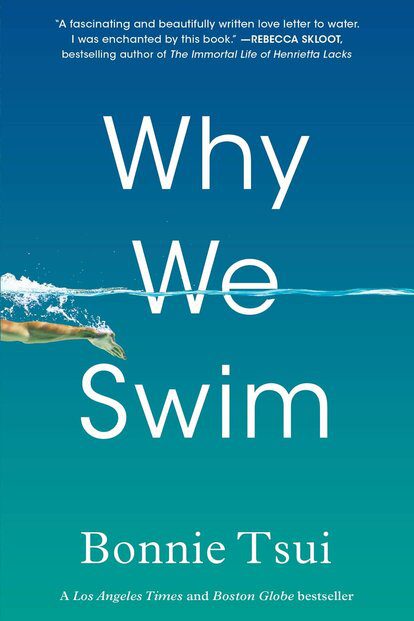
She also writes about everyday people such as a Baghdad swim club that meets in Saddam Hussein’s former palace pool, modern-day Japanese samurai swimmers, and an Icelandic fisherman who improbably survives a wintry six-hour swim after a shipwreck. Bonnie investigates what it is about water that seduces us, and why we come back to it again and again.
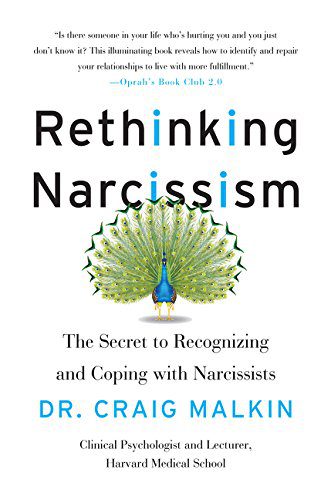
In Rethinking Narcissism: The Secret to Recognizing and Coping with Narcissists Harvard Medical School psychologist Craig Malkin addresses the “narcissism epidemic” by illuminating the spectrum of narcissism, identifying ways to control the trait, and explaining how too little of it may be a bad thing.
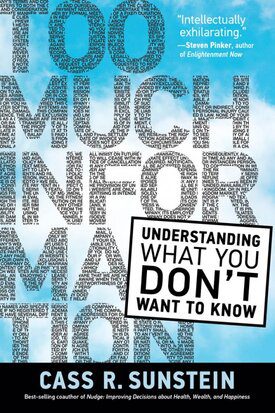
In Too Much Information: Understanding What You Don’t Want to Know, American legal scholar Cass R. Sunstein examines the effects of information on our lives. Policymakers emphasize “the right to know,” but Sunstein takes a different perspective, arguing that the focus should be on human well-being and what information contributes to it. Government should require companies, employers, hospitals, and others to disclose information not because of a general “right to know” but when the information in question would significantly improve people’s lives.
“Hard things are hard because there are no easy answers or recipes. They are hard because your emotions are at odds with your logic. They are hard because you don’t know the answer and you cannot ask for help without showing weakness.”
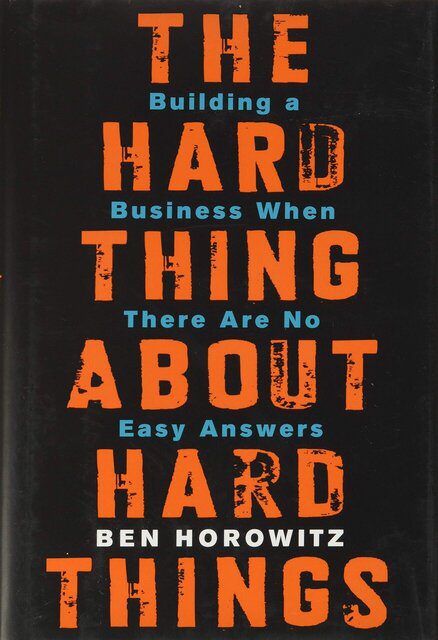
In The Hard Thing About Hard Things: Building a Business When There Are No Easy Answers cofounder of Andreessen Horowitz, Ben Horowitz shares timeliness advice on building and running a startup. Ben tells the story of how his company Opsware went from doomed in the eyes of the world to a $1.6 billion outcome with no recapitalization. He shares war stories including several near bankruptcies, a stock price of $0.35 per share, unlimited bad press, and three separate layoffs where they lost a total of four hundred employees.
Ben describes strategies for laying off employees and executives the right way, communicating effectively, demoting a loyal friend, lessons learned as a founder-ceo, managing the toughest problems and making the tough calls.
Ben shared the insights he’s gained developing, managing, selling, buying, investing in, and supervising technology companies. A lifelong rap fanatic, he amplifies business lessons with lyrics from his favorite songs, telling it straight about everything from firing friends to poaching competitors, cultivating and sustaining a CEO mentality to knowing the right time to cash in.
In Self-Compassion: The Proven Power of Being Kind to Yourself, Associate Professor of Educational Psychology at the University of Texas at Austin, Dr. Kristin Neff asserted that people who are more self-compassionate lead healthier, more productive lives than those who are self-critical.
“Self-Compassion doesn’t mean that I think my problems are more important than yours, it just means I think that my problems are also important and worthy of being attended to.”
In You Can’t Send a Duck to Eagle School: And Other Simple Truths of Leadership, founder of Simple Truths and Successories, Inc., Mac Anderson shares lessons learned from forty years of leadership experience in building teams, creating a culture, and casting vision.
In “The Art of Possibility: Transforming Professional and Personal Life“, musical director of the Boston Philharmonic Orchestra Benjamin Zander and psychotherapist Rosamund Stone Zander presents twelve practices for bringing creativity and a sense of possibility into our professional and personal lives.
Books Premise
Many of the circumstances that seem to block us in our daily lives may only appear to do so based on a framework of assumptions we carry with us. Draw a different frame around the same set of circumstances and new pathways come into view. Find the right framework and extraordinary accomplishment becomes an everyday experience.