Category

Book Summaries

Category

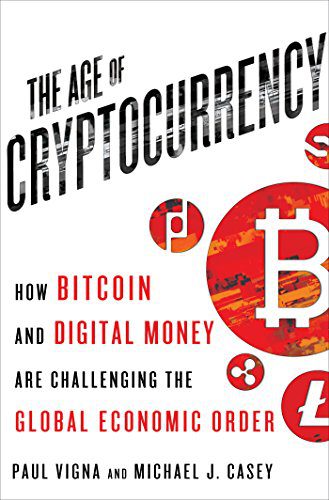
Book Title: The Age of Cryptocurrency: How Bitcoin and the Blockchain Are Challenging the Global Economic Order 
Authors: Paul Vigna  and Michael J. Casey 

Print | Kindle(eBook) | Audiobook

In The Age of Cryptocurrency, Wall Street journalists Paul Vigna and Michael J. Casey write about Cryptocurrencies’ promise and challenges with special emphasis on Bitcoin. The authors posit that Bitcoin and other cryptocurrencies have the potential of becoming a generally accepted model of payment. Still, the technology and the pioneers need to work on the reputation and trust challenges of Bitcoin. They provide great information for newbies and cryptocurrency enthusiasts – the history of money, blockchain, the promise of eliminating middlemen, cryptocurrency mining, altcoin, government regulations, the opportunities, and the challenges of cryptocurrency.

The most magical things in life, on and off the stage, are often the result of the correct application of the most basic principles imaginable.

Kindle(eBook)

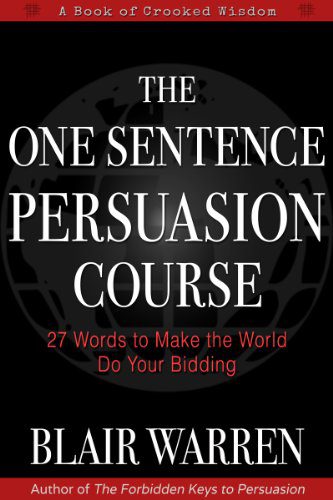
In the One Sentence Persuasion Course, Persuasion expert Blair Warren shares insights he garnered studying persuasion, human relation, and influence. Waren shares various examples to convey his point, such as The Secret, Scapegoating as used in the Depression, Weight Loss and Landscaping Industry, Validate and Fascinate, Correct and Convince, etc. According to Blair Warren, the 27 words that could allow us to persuade almost anyone :

People will do anything for those who encourage their dreams, justify their failures, allay their fears, confirm their suspicions, and help them throw rocks at their enemies.

Print | Kindle(eBook)

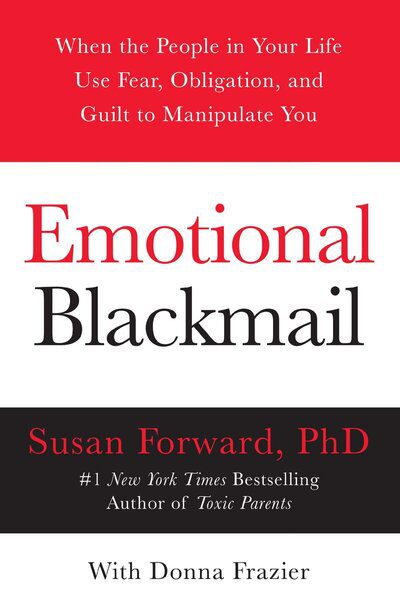
In Emotional Blackmail, Therapist and Best Selling Author Susan Forward, Ph.D., presents the anatomy of a relationship damaged by manipulation and gives readers an arsenal of tools to fight back. Dr. Forward provides powerful, practical strategies for blackmail targets, including checklists, practice scenarios, and concrete communications techniques that will strengthen relationships and break the blackmail cycle for good.

Favourite Takeaways –Emotional Blackmail by Susan Forward

Print | Kindle (eBook) | Audiobook

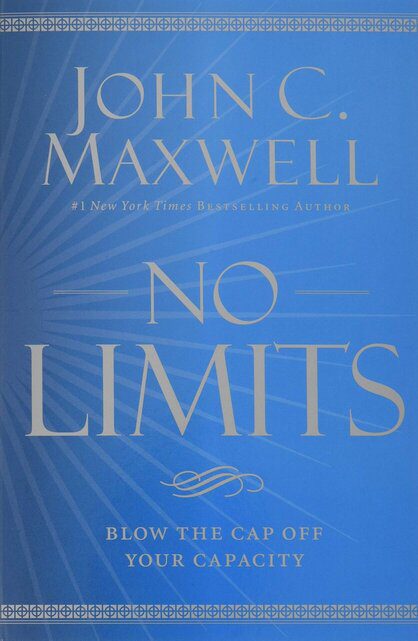
Many of us set limitations on our capacity, we set limits on what is possible in our lives. New York Times bestselling author John C. Maxwell, identified 17 capacities that we all possess and he also provides actionable advice on how to increase our potential in each. The Core theme of No Limit: If you are aware of yourself and your ability to improve, if you develop the abilities you already possess, and if you make the everyday choices that help you improve, you will reach your capacity.

John Maxwell Identified 7 capacities and 10 choices we can develop, grow and harness to blow the CAP off our limitations. Everyone has capacities that are based on their natural talents. Some of them require very specific abilities, such as those found in symphony musicians, professional athletes, and great artists.

The Seven Capacities

Energy Capacity—Your Ability to Push On Physically

Emotional Capacity—Your Ability to Manage Your Emotions

Thinking Capacity—Your Ability to Think Effectively

People Capacity—Your Ability to Build Relationships

Creative Capacity—Your Ability to See Options and Find Answers

Production Capacity—Your Ability to Accomplish Results

Leadership Capacity—Your Ability to Lift and Lead Others

Increased capacity comes from making the right choices.

The Ten Choices:

Responsibility Capacity—Your Choice to Take Charge of Your Life

Character Capacity—Your Choices Based on Good Values

Abundance Capacity—Your Choice to Believe There Is More Than Enough

Discipline Capacity—Your Choice to Focus Now and Follow Through

Intentionality Capacity—Your Choice to Deliberately Pursue Significance

Attitude Capacity—Your Choice to Be Positive Regardless of Circumstances

Risk Capacity—Your Choice to Get Out of Your Comfort Zone

Spiritual Capacity—Your Choice to Strengthen Your Faith

Growth Capacity—Your Choice to Focus on How Far You Can Go

Partnership Capacity—Your Choice to Collaborate with Others
Print | Kindle(eBook) | Audiobook

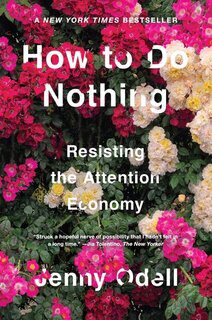
In How to Do Nothing: Resisting the Attention Economy, American artist Jenny Odell writes about the commercialization of our attention and the need to reclaim our time. In a world where addictive technology is designed to buy and sell our attention and our value is determined by our 24/7 data productivity, it can seem impossible to escape. Odell shares strategies for winning back our attention through solitude, redirecting our priorities, and becoming more self-aware.

Audiobook

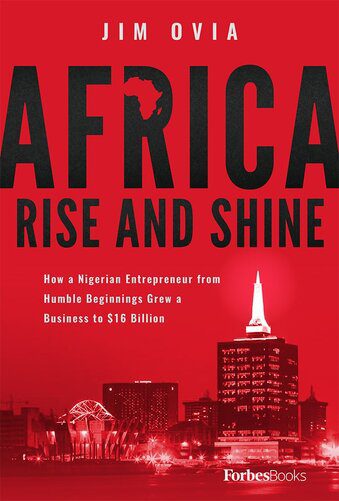
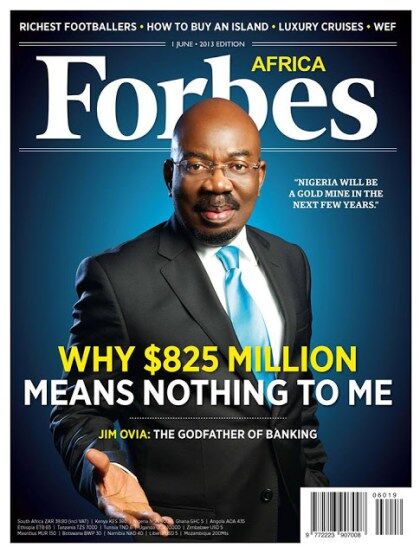
Africa Rise And Shine is the story of how Jim Ovia built Zenith Bank from a nascent business with $4 million in shareholders’ funds to an internationally recognized brand and institution with more than $16 billion in assets despite a decaying infrastructure and periods of economic instability. Ovia wrote the book determined to redefine the gloom narrative about Africa and illustrate the real Africa behind the headlines. We are a some total of our lives experiences and it is always exciting to read, learn and discover what makes highly successful people like Jim Ovia thick. Success they say leaves clues and Jim Ovia’s story leaves lots of very relatable clues.

jim-ovia-2013-forbes

Print | Kindle(eBook) | Audiobook

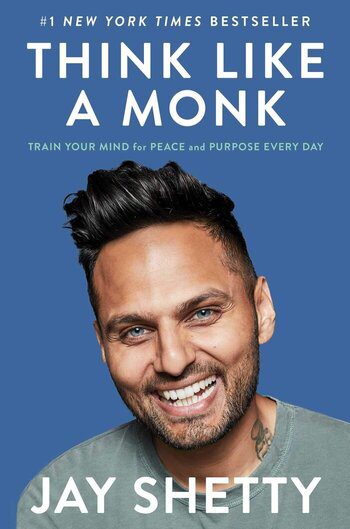
In Think Like a Monk, former monk Jay Shetty writes about the timeless wisdom he learned as a monk into practical steps anyone can take every day to live a less anxious, more meaningful life. Shetty shares great insight and offers advice on reducing stress and improving focus in our very distracted and ever-busy world. The advice Shetty provided is based on his experiences at the Ashram Monastery. He practiced as a monk for three years, and he says that thinking like a monk is not about dressing like a monk but rewiring our habits and thought process.

“Our thoughts are like clouds passing by. The self, like the sun, is always there. We are not our minds.”

Kindle (eBook) | Hardcover

 In Leaving the tarmac, Nigerian Entrepreneur and former group managing director of Access Bank Plc shares how he and Herbert Wigwe turned Access Bank, a crisis-prone Nigerian Bank they bought in 2002, into one of the most admired banks in Nigeria and Africa. Aigboje gives the readers a front-row seat to the challenges, setbacks, successes, and failures they had to deal with in the process of building a world-class financial institution in an environment like Nigeria.

The book provides insights, lessons learned, a history of Nigerian banking, banking regulation, and a blueprint for dealing with the government while running a thriving business in Nigeria. It is a story of grit, getting things done, building a great team, the power of timing, and striving for excellence.

Leaving the Tarmac Mentorship and Internship Programme

As part of the global launch of Leaving the Tarmac: Buying a Bank in Africa, Mr Aigboje Aig-Imoukhuede is offering internships to five exceptional young Nigerians.

  I was excited to read the book because most successful Nigerian business leaders/Entrepreneurs hardly share their success stories. It can be hard for aspiring Entrepreneurs to read their own version of their journey. Leaving the Tarmac is a relatable story about the ups and downs of running a business in Nigeria, continuous improvement, learning through best practices, and connecting the dots by seizing the opportunities around you.

Favourite Takeaways – Leaving the Tarmac

“The new toolmakers do not intend to rob you of your inner life, only to surveil and exploit it. All they ask is to know more about you than you know about yourself.”

Print | Kindle(eBook) | Audiobook

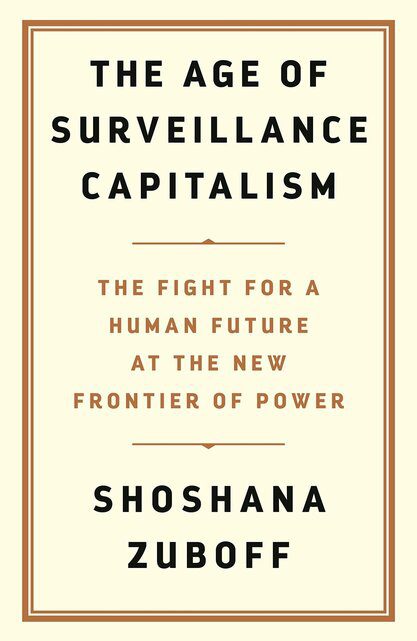
In The Age of Surveillance Capitalism: The Fight for a Human Future at the New Frontier of Power, American Harvard professor, and social psychologist, Shoshana Zuboff argue that the biggest technology companies such as Google, Facebook, Twitter, and Amazon are exploiting our attention, modifying our behavior, and selling our data to the highest bidding advertisers.  Surveillance Capitalism is an economic system centered around the commodification of personal data with the core purpose of profit-making. 

Zuboff noted:

“Forget the cliché that if it’s free, “You are the product.” You are not the product; you are the abandoned carcass. The “product” derives from the surplus that is ripped from your life.”

Surveillance Capitalists unilaterally claims human experience as free raw material for translation into behavioural data which] are declared as a proprietary behavioural surplus, fed into advanced manufacturing processes known as ‘machine intelligence’, and fabricated into prediction products that anticipate what you will do now, soon, and later.

Favourite Takeaways – The Age of Surveillance Capitalism

Print | Kindle(eBook) | Audiobook

Title: Competing in the Age of AI: Strategy and Leadership When Algorithms and Networks Run the World
Authors: Marco Iansiti and Karim R. Lakhani
Published: 2020 by Harvard Business Review
Rating: 8/10
Theme: The authors observed that a new breed of firms, characterized by digital scale, scope, and learning, is eclipsing traditional managerial methods and constraints, colliding with traditional firms and institutions, and transforming our economy. Software, analytics, and AI are reshaping the operational backbone of the firm.

In Competing in the Age of AI, Authors Marco Iansiti and Karim R. Lakhani argue that reinventing a firm around data, analytics, and AI removes traditional constraints on the scale, scope, and learning that have restricted business growth for hundreds of years. From Airbnb to Ant Financial, Microsoft to Amazon, research shows how AI-driven processes are vastly more scalable than traditional processes, allow massive scope increase, enabling companies to straddle industry boundaries, and create powerful opportunities for learning—to drive ever more accurate, complex, and sophisticated predictions.

The book describes the profound implications of artificial intelligence for business. It is transforming the very nature of companies—how they operate and how they compete. When a business is driven by AI, software instructions and algorithms make up the critical path in the way the firm delivers value. This is the “runtime”—the environment that shapes the execution of all processes.

Print | Kindle(eBook) | Audiobook

A few weeks before the end of the fall semester in 2009, New York Times bestselling author of The Innovator’s Dilemma, Clayton M. Christensen, learned that he had cancer similar to the one that had killed his dad. He shared the news with his students at the Harvard Business school, and he also informed them that his cancer ( follicular lymphoma) might not respond to the available therapies.

 In How Will You Measure Your Life? Christensen shared insights and observations about life and business. His core message is for his students and readers to pursue purpose and meaning in their careers and relationships.

Everyone knows they’re going to die, but nobody believes it. If we did, we would do things differently.

Print | Kindle(eBook) | Audiobook

Tuesdays with Morrie is a memoir by American author Mitch Albom about a series of visits Mitch made to his former sociology professor Morrie Schwartz, as Schwartz gradually dies of Amyotrophic Lateral Sclerosis (ALS).  The book recounts the fourteen visits Mitch made, their conversations, Morrie’s lectures, and his life experiences. The book is a short philosophical book about accepting death and, in the process learning to live. It is a story about an old man who is dying and a young man who is lost, the old man (his professor) teaches him some life lessons on his dying days about what is really important in life.

The book was adapted into a 1999 television film, directed by Mick Jackson and starring Hank Azaria and Jack Lemmon.

“Once you learn how to die, you learn how to live.”

Favourite Takeaways – Tuesdays with Morrie:

Print | Kindle (eBook) | Audiobook

In Working Backwards, Collin and Bill share insights. stories and the principles that drove the success of Amazon to become one of the world’s most valuable brands. The Title of the book working back is derived from amazon’s product development process: working backwards from the desired customer experience. Amazon is the largest Internet company by revenue in the world. It is the second-largest private employer in the United States and one of the world’s most valuable companies. As of 2020, Amazon has the highest global brand valuation.

The authors illuminate how Amazon’s fourteen leadership principles inform decision-making at all levels and reveal how the company’s culture has been defined by four characteristics: customer obsession, long-term thinking, eagerness to invent, and operational excellence. Bryar and Carr explain the set of ground-level practices that ensure these are translated into action and flow through all aspects of the business.

The Title of the book working back is derived from amazon’s product development process: working backwards from the desired customer experience


Working Backwards is a practical guidebook and a corporate narrative, filled with the authors’ in-the-room recollections of what “Being Amazonian” is like and how it has affected their personal and professional lives. They demonstrate that success on Amazon’s scale is not achieved by the genius of any single leader, but rather through a commitment to and execution of a set of well-defined, rigorously executed principles and practices.

Print | Kindle(eBook) | Audiobook

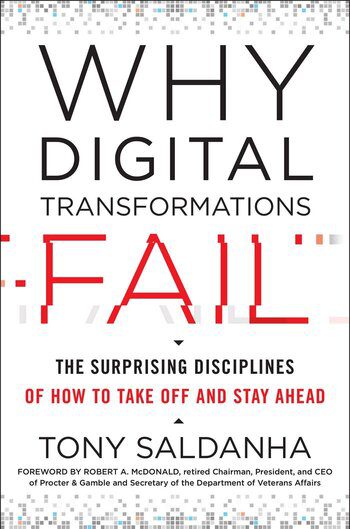
Former Procter & Gamble Vice President for IT and Shared Services, Tony Saldanha articulates strategies for leading a successful digital transformation and he also demonstrates how to improve the odds of digital transformation by lowering the costs and risk of change. Saldanha proposes using a five-stage model for digital transformation and a disciplined process for executing it.

The reason why digital transformations fail is that they take more discipline than one might expect. It takes a surprising amount of discipline and a positive outlook of the possibilities for digital transformations to succeed.

The book is about understanding why digital transformations fail as a means to a more important end, which is how to thrive in an industrial revolution. 70 percent of digital transformations fail, to get the 30 percent right requires discipline. The reason why digital transformations fail is that they take more discipline than one might expect. It takes a surprising amount of discipline and a positive outlook of the possibilities for digital transformations to succeed.

Favourite takeaways – Why Digital Transformations Fail

Procrastination is a habit you develop to cope with anxiety about starting or completing a task. It is your attempted solution to cope with tasks that are boring or overwhelming.

Print Kindle(eBook) | Audiobook

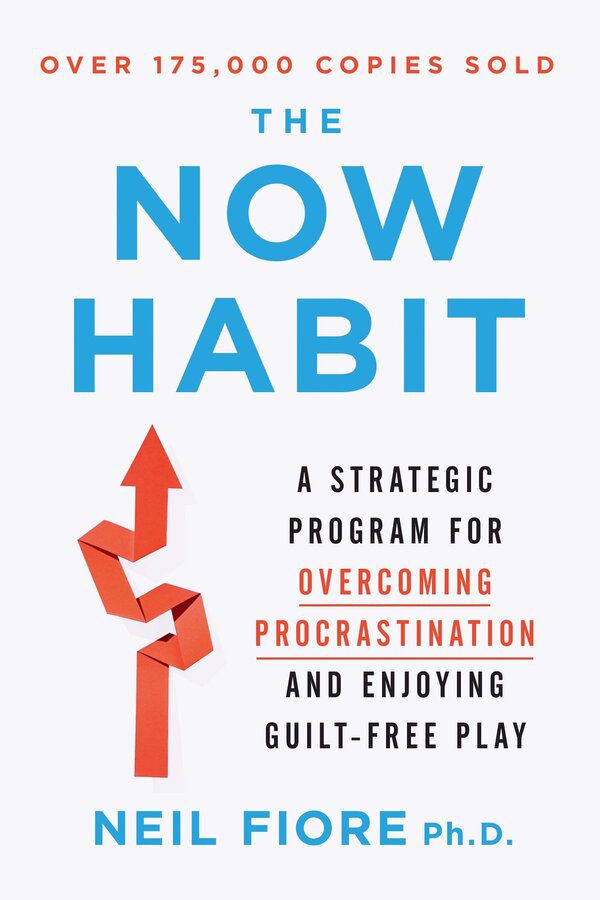
In The Now Habit: A Strategic Program for Overcoming Procrastination and Enjoying Guilt-Free Play, Psychologists Dr. Neil Fiore highlight strategies, tools, and a comprehensive plan for overcoming procrastination and managing stress. Dr. Fiore argues that procrastination is a coping mechanism we use to deal with overwhelm and stressful situations. The Now Habit program presents 10 tools for overcoming procrastination such as The Unschedule, Three-dimensional thinking, Making worry work for you, persistent starting, setting realistic goals, guilty-free play, and working in the flow state.

Favourite Take Aways – The Now Habit

Procrastination is a mechanism for coping with the anxiety associated with starting or completing any task or decision.