Category

Insight

Category

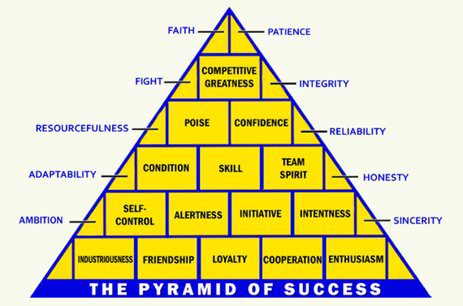
“Success is peace of mind that is the direct result of self-satisfaction in knowing you did your best  to become the best that you are capable of  becoming.”

 John Wooden won ten NCAA national championships, seven of them in consecutive years had four undefeated seasons, including an 88-game winning streak. John Wooden had a 620-147 record during his 27-year tenure as the head coach of the UCLA Bruins.

Wooden’s Pyramid of Success is the key to obtaining peace of mind that is the direct result of the self-satisfaction achieved when you know that you did your best to become the best that you are capable of becoming.

One of the hallmarks of highly successful people is their morning routine and regimen. Some of the early risers include Apple CEO Tim Cook, Oprah Winfrey, Indra Nooyi, and Barrack Obama, to name but a few. I have always been fascinated by success and the routine of the successful people in our world. As it is often said, “Success leaves clues”. One of the clues and patterns have found in my reading of multiple biographies and autobiographies is the dedication, routine, consistency, and regimen of the greats.

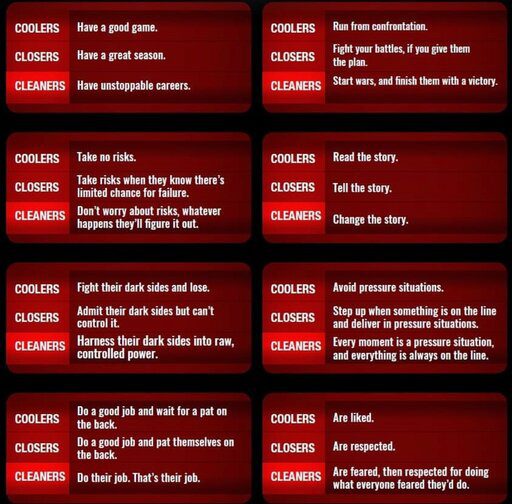
Tim S. Grover was the trainer of some of the greatest elite NBA players and Hall of Famers such as Micheal Jordan, Kobe Bryant and Dwyane Wade. In his 2013 book, Relentless: From Good to Great to Unstoppable, Grover describes the mindset of the greatest elite champions. He categorized competitors into three types: Cooler, Closer and Cleaner.

Grover shares various stories and characteristics of the various competitor types. The book Relentless: From Good to Great to Unstoppable, is based on the 13 qualities exhibited by most cleaners.

“The pain of life is pure salt; no more, no less. The amount of pain in life remains the same, exactly the same. But the amount of bitterness we taste depends on the container we put the pain in. So when you are in pain, the only thing you can do is to enlarge your sense of things…. Stop being a glass. Become a lake.”

An aging Hindu master grew tired of his apprentice complaining, and so, one morning, sent him for some salt. When the apprentice returned, the master instructed the unhappy young man to put a handful of salt in a glass of water and then to drink it. “How does it taste?” the master asked. “Bitter,” spit the apprentice. The master chuckled and then asked the young man to take the same handful of salt and put it in the lake.

The two walked in silence to the nearby lake, and once the apprentice swirled his handful of salt in the water, the old man said, “Now drink from the lake.” As the water dripped down the young man’s chin, the master asked, “How does it taste?” “Fresh,” remarked the apprentice. “Do you taste the salt?” asked the master. “No,” said the young man. At this, the master sat beside this serious young man who so reminded him of himself and took his hands, offering,

“The pain of life is pure salt; no more, no less. The amount of pain in life remains the same, exactly the same. But the amount of bitterness we taste depends on the container we put the pain in. So when you are in pain, the only thing you can do is to enlarge your sense of things…. Stop being a glass. Become a lake.”

Source: The Book of Awakening by Mark Nepo.

Chaque matin, je médite avec l’application de méditation de pleine conscience – Calm. Depuis le 27 décembre 2021, je médite tous les matins au moins 25 à 30 minutes avec des guides de méditation: Daily Jay – Jay Shetty, Daily CalmTamara Levitt, Daily Trip – Jeff Warren. J’ai commencé à utiliser l’application calme en 2020 et je suis sur ma séquence actuelle de cohérence depuis décembre 2021.

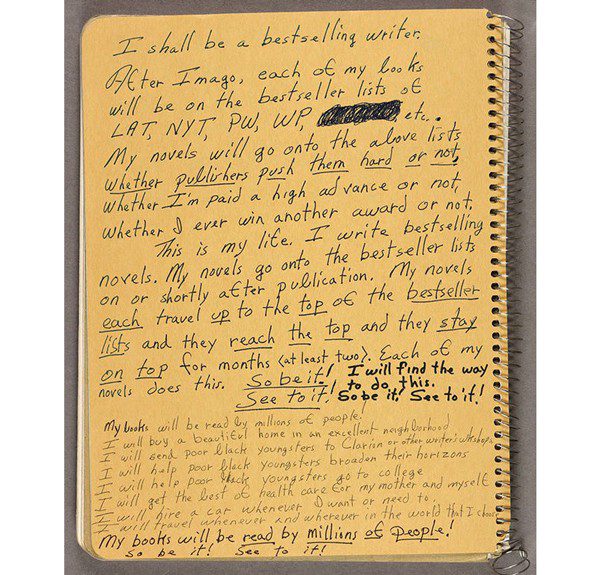
“I am a Bestselling Writer. I write Bestselling Books. Every day in every way, I am researching and writing my award-winning Bestselling Books and short stories. Every one of my books reaches and remains for two or more months at the top of the bestseller lists. So Be It! See To It!”

The above is a journal entry (note to self) of American science fiction author Octavia Butler. She often wrote these motivational notes to help her stay committed to her goals and have something to reach for. Octavia went on to become the first science-fiction writer to receive a MacArthur Fellowship. She also is the first woman of colour to win both the Hugo and Nebula awards. Her published works include Kindred Wild SeedParable of the Sower, and Parable of the Talents,

Be careful what you ask for; you might get it.

I shall be a bestselling writer. After Imago, each of my books will be on the bestseller lists of LAT, NYT, PW, WP, etc. My novels will go onto the above lists whether publishers push them hard or not, whether I’m paid a high advance or not, whether I ever win another award or not.

This is my life. I write bestselling novels. My novels go onto the bestseller lists on or shortly after publication. My novels each travel up to the top of the bestseller lists and they reach the top and they stay on top for months . Each of my novels does this.

So be it! I will find the way to do this. See to it! So be it! See to it!

My books will be read by millions of people!

I will buy a beautiful home in an excellent neighborhood

I will send poor black youngsters to Clarion or other writer’s workshops

I will help poor black youngsters broaden their horizons

I will help poor black youngsters go to college

I will get the best of health care for my mother and myself

I will hire a car whenever I want or need to.

I will travel whenever and wherever in the world that I choose

My books will be read by millions of people!

So be it! See to it!

 “I am a Bestselling Writer. I write Bestselling Books . . . Every day in every way I am researching and writing my award winning Best selling Books and short stories . . . Everyone of my books reaches and remains for two or more months at the top of the bestseller lists . . . . So Be It! See To It.”

I remember wanting to participate in my first ever marathon in 2013; I was told repeatedly that I can’t do it, “what has gone into you,” some said, you are wasting your time, you cannot finish it etc. What most of them did not know was my reason for wanting to participate in the marathon. I had just lost my dear cousin (Wasiu Idris) in gruesome circumstances in a foreign land. I was in so much pain, grief, dejection, loneliness, sadness, and a very dark place. The marathon was a coping mechanism for me to deal with his death. I eventually finished the marathon in 6hrs+, and the joy of conquering the trail, meditating and mulling about life’s rollercoaster was therapeutic and transformative for me.

On your path to achieving any goal, you are going to come across sometimes – well-meaning individuals and mischievous individuals that are going to discourage you through sarcastic statements such as “You’d better go find something better to do with your life” and “You can not do that,” your race, gender, religion disqualify you from doing that. If you allow it, people will project their insecurities, self-doubt, weakness and fears toward you. As Indian Anti-colonial nationalist and political ethicist, Mahatma Gandhi once said, “First they ignore you, then they laugh at you, then they fight you, then you win.” The key is to believe and bet on yourself against all odds.

First they ignore you, then they laugh at you, then they fight you, then you win. – Mahatma Gandhi

In his book, Put Your Dream to the Test: 10 Questions to Help You See It and Seize It, American author John C. Maxwell advises readers to be wary of who to listen to. He writes

Which critics count and which don’t? Heed the advice of the critic when . . .

  • You are unconditionally loved by the one who criticizes you.
  • The criticism is not tainted by his or her personal agenda.
  • The person is not naturally critical of everything.
  • The person will continue giving support after giving advice.
  • He or she has knowledge and success in the area of the criticism.

The journey to your self-actualization is going to be fraught with trials and tribulations, naysayers and doubters but you have to be wary of who you listen to. The world is full of so-called experts and gurus that do not practice what they preach or even know what they are talking about. The business expert without a business, the web developer without a website. That someone is perceived to be an expert or certified in a particular profession does not necessarily mean they know what they are talking about or have your best interest at heart.

I’ll show you – Becoming Michelle Obama

The former first lady of the United State, Michelle Obama, narrates a story about her ordeal with a school counsellor that thought she was not Princeton material. In her memoir, Becoming, she writes:

“Early in my senior year at Whitney Young, I went for an obligatory first appointment with the school college counselor to whom I’d been assigned.”

“I can’t tell you much about the counselor, because I deliberately and almost instantly blotted this experience out. I don’t remember her age or race or how she happened to look at me that day when I turned up in her office doorway, full of pride at the fact that I was on track to graduate in the top 10 percent of my class at Whitney Young, that I’d been elected treasurer of the senior class, made the National Honor Society, and managed to vanquish pretty much every doubt I’d arrived with as a nervous ninth grader. I don’t remember whether she inspected my transcript before or after I announced my interest in joining my brother at Princeton the following fall.”

“It’s possible, in fact, that during our short meeting the college counselor said things to me that might have been positive and helpful, but I recall none of it. Because rightly or wrongly, I got stuck on one single sentence the woman uttered.”

“I’m not sure,” she said, giving me a perfunctory, patronizing smile, “that you’re Princeton material.”

“Her judgment was as swift as it was dismissive, probably based on a quick-glance calculus involving my grades and test scores. It was some version, I imagine, of what this woman did all day long and with practiced efficiency, telling seniors where they did and didn’t belong. I’m sure she figured she was only being realistic. I doubt that she gave our conversation another thought.”

Failure is a feeling long before it’s an actual result.

“But as I’ve said, failure is a feeling long before it’s an actual result. And for me, it felt like that’s exactly what she was planting—a suggestion of failure long before I’d even tried to succeed. She was telling me to lower my sights, which was the absolute reverse of every last thing my parents had ever told me.
Had I decided to believe her, her pronouncement would have toppled my confidence all over again, reviving the old thrum of not enough, not enough.”

“But three years of keeping up with the ambitious kids at Whitney Young had taught me that I was something more. I wasn’t going to let one person’s opinion dislodge everything I thought I knew about myself. Instead, I switched my method without changing my goal. I would apply to Princeton and a scattershot selection of other schools, but without any more input from the college counselor. Instead, I sought help from someone who actually knew me. Mr. Smith, my assistant principal and neighbor, had seen my strengths as a student and furthermore trusted me with his own kids. He agreed to write me a recommendation letter.”

I wasn’t going to let one person’s opinion dislodge everything I thought I knew about myself. Instead, I switched my method without changing my goal.

“That day I left the college counselor’s office at Whitney Young, I was fuming, my ego bruised more than anything. My only thought, in the moment, was I’ll show you.”

“And ultimately, I suppose that I did show that college counselor, because six or seven months later, a letter arrived in our mailbox on Euclid Avenue, offering me admission to Princeton.”

“I never did stop in on the college counselor to tell her she’d been wrong—that I was Princeton material after all. It would have done nothing for either of us. And in the end, I hadn’t needed to show her anything. I was only showing myself.”

People are going to say what they want to say, discourage you, and project their fears and insecurities toward you; your job is to let them have their say but focus on your goal. People have the right to their opinion but not the facts. The fact is that you can achieve anything that you set your mind to achieving. It is going to be tough, but you can get the last laugh by succeeding widely. As it is often said, “Success is the best revenge.”

All the best in your quest to get better. Don’t Settle: Live with Passion.

Contrary to what you see in the news and on social media, everyone is trying to figure it out. From your favourite celebrities, politicians, writers, athletes, mentors, parents and everyone in between. We live in a world where, we are all supposed to perform for the world in almost all our engagements, such as interacting with our work colleagues, partners, well-curated social media posts etc. We are all supposed to know what we are doing, we ought to have it figured out at some point, but the reality is that we are trying to figure out a particular aspect of our life. For Example, the former president of the United States, Barrack Obama, was battling cigarette addiction at some point.

Gamification is the strategic attempt to enhance systems, services, organizations, and activities by creating similar experiences to those experienced when playing games in order to motivate and engage users. Gamification is a great way to motivate/trick yourself into achieving your goals. I have started noticing a pattern in my quest to execute my set goals. I have realized that goals that are attached to a form of play, fun, anchor or regimen are easier to achieve.

By gamifying my goals through the use of an app such as Strava (Leaderboard) for running, swimming and cycling, and Calm App (Streak) for meditation; I have stayed consistent with the goals that I want to achieve. The sense of completion with these apps is very fulfilling as the small acts of completing each activity are so gratifying. I meditate every morning for 26 to 30 minutes by listening to guided meditations from Tamara Levitt, Jhay Shetty and Jeff Warren. The streak and the minutes completed section of the app is one of my favourite things to look forward to daily.

Life happens to us all at some point, some of us are born poor, and dealt with childhood trauma, domestic violence, childhood sexual abuse, and addiction among other challenges. Your history is not your destiny. Where you are right now is who you are. We often mistake our life situation with our destiny but one of the greatest tools we have is our ability to change our course of direction at any point in time by deciding to. As American psychologist, William James once observed; The greatest discovery of my generation is that a human being can alter his life by altering his attitudes.

The greatest discovery of my generation is that a human being can alter his life by altering his attitudes. – William James

Your job and environment are not who you are. One of the most transformative questions, we all have to answer at some point is: “Who are you? Why I am here? The moment you answer these questions and really know what your purpose here is, you are going to go places.

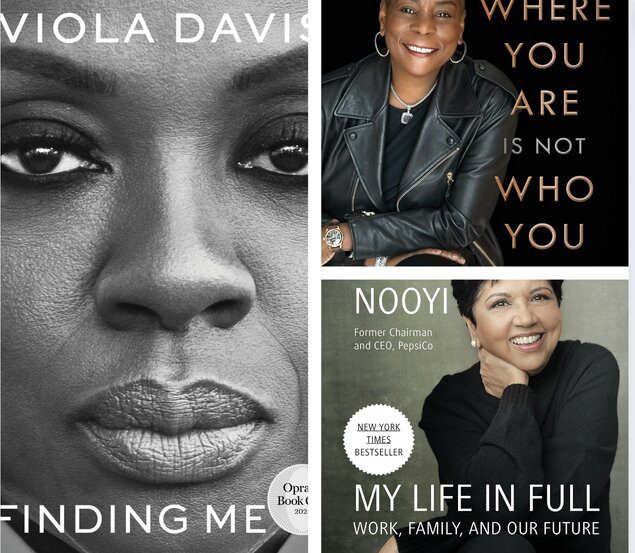
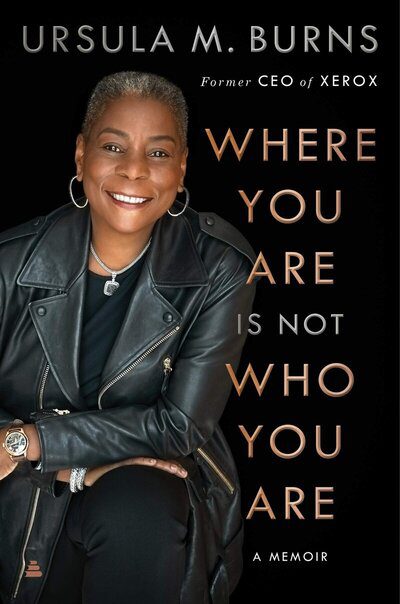
  • Ursula Burns was raised by her immigrant mum in poverty but against all odds was named the CEO of Xerox, making her the first African American woman CEO of a Fortune 500 company.
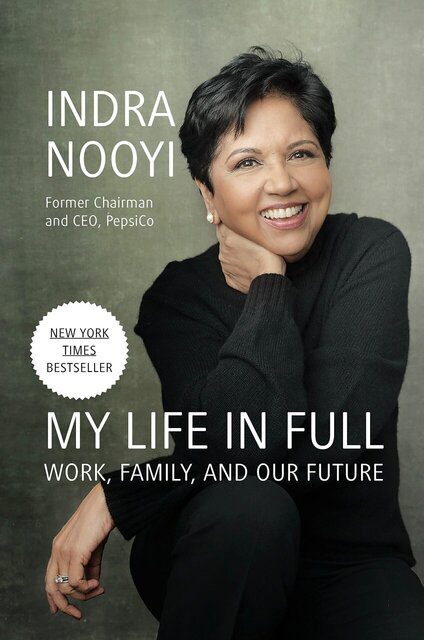
  • Indra Nooyi grew up in India with humble beginnings but rose to become the CEO of Pepsico which is the second-largest food and beverage company in the world.
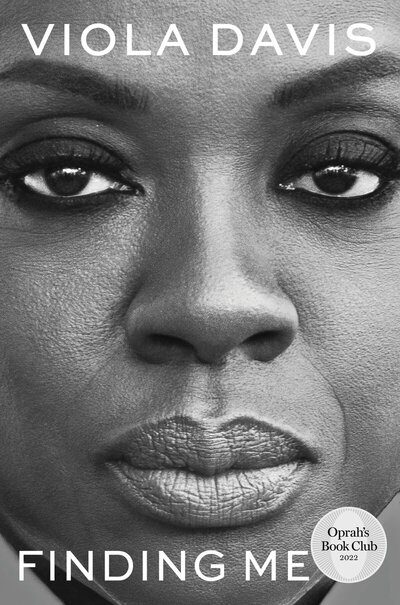
  • Viola Davis grew up in abject poverty, domestic violence, childhood trauma and brokenness but she overcame it all to become one of the most recognized faces on TV with an Oscar, Primetime Emmy Award and two Tony Awards becoming the only African-American to achieve the Triple Crown of acting.

How did these 3 inspiring women who grew up in challenging environments rise to the top of their professions against all odds and challenges stacked against them? They decided to take their destiny in their hands, they studied hard, built relationships, created their luck, prepared for their opportunities and executed relentlessly. Here are some great insights from the biographies of these 3 great women on how they did it:

In her autobiography, Where You Are Is Not Who You Are: A Memoir, the first African American woman CEO of a Fortune 500 company, Ursula Burn chronicles her story of growing up in poverty and the lessons learned on her path to greatness. She writes:

As a Black woman, I had to prove myself worthy of whatever position I was in because my coworkers would cut me no slack. I hadn’t slept my way up the chain. I wasn’t the recipient of preferential treatment. I wanted to make sure that the audience knew that I’d earned my position. To do that, I made sure they understood that I knew at least as much as anyone in the room. It was a defense mechanism against the assumption that I didn’t belong.

“My mother refused to have her children be defined by it. “Where you are is not who you are,” she told us time and again. I didn’t know what she was talking about.

Poverty has a pace, and the sidewalks were crowded with people rushing around in a frantic fashion, people racing great distances to save $1 here or there or hurrying to stand in line for a handout.

Indra Nooyi grew up in India and was named PepsiCo CEO in 2006 making her the first woman of colour and immigrant to run a Fortune 50 company.  In her autobiography, My Life in Full: Work, Family, and Our Future, she writes about her journey from rural India to leading a multinational company.

Mine is not an immigrant story of hardship—of fighting my way to America to escape poverty, persecution, or war. I don’t know what it feels like to be a refugee, homeless because my own country is in crisis. I spoke English. I had landed in the US with $500. I was at Yale. And I had the safety net of my family in India, a place that I was familiar with and loved and that would take me back.

“I had no money to spare. My scholarships and loans totaled about $15,000 a year, roughly evenly split, and I spent almost all on tuition, room, and board. I took a job working the front desk and the manual switchboard at Helen Hadley Hall three to four days a week, earning $3.85 an hour for midnight to 5 a.m. That was fifty cents an hour more than the daytime slot and $1.20 more than the minimum wage, which was $2.65 in those days. When the phone rang at reception, I’d buzz a resident’s room and put the call through to the hallway phone. All night, students ran down the hall in their nightwear and slippers to get their calls. I monitored the front door, sorted the mail, and did my homework.”

In Finding Me: A Memoir, American actress Viola Davis describes her roller-coaster journey from growing up in abject poverty to Hollywood fame. She writes:

“We were “po.” That’s a level lower than poor. I’ve heard some of my friends say, “We were poor, too, but I just didn’t know it until I got older.” We were poor and we knew it. There was absolutely no disputing it. It was reflected in the apartments we lived in, where we shopped for clothes and furniture—the St. Vincent de Paul—the food stamps that were never enough to fully feed us, and the welfare checks. We were “po.” We almost never had a phone. Often, we had no hot water or gas. We had to use a hot plate, which increased the electric bill. The plumbing was shoddy, so the toilets never flushed.

You know, when you’re poor, you live in an alternate reality. It’s not that we have problems different from everyone else, but we don’t have the resources to mask them. We’ve been stripped clean of social protocol. There’s an understanding that everyone is trying to survive and who is going to get in the way of that?

As the stories of these great women shows, your history is not who you are and with persistence and commitment, all things are possible. Inspite of their humble background, Ursula Burns became the CEO of XEROX, Indra Nooyi became the first African American woman CEO of a Fortune 500 company and Violas Davis became an Hollywood superstar despite the poverty, abuse and trauma of her childhood.

All the Best in your quest to get Better. Don’t Settle: Live with Passion.

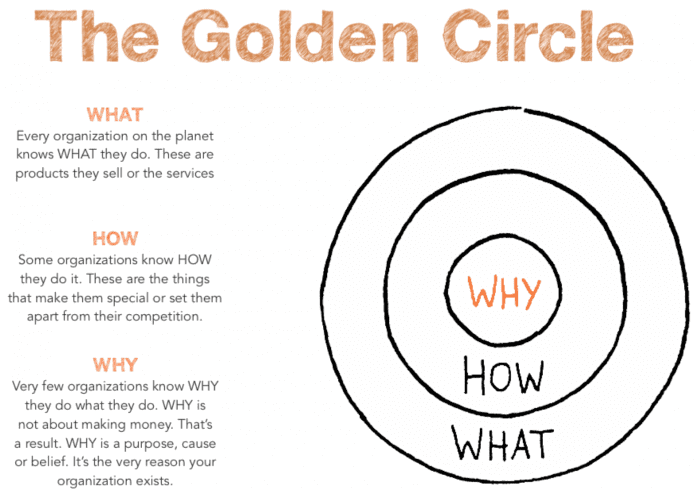
In his book, Start with Why: How Great Leaders Inspire Everyone to Take Action,  British-American author Simon Sinek talks about the concept of the Golden Circle. It is a framework that Sinek reckon can be used by organizations to build inspiring movements and built to last enterprise.

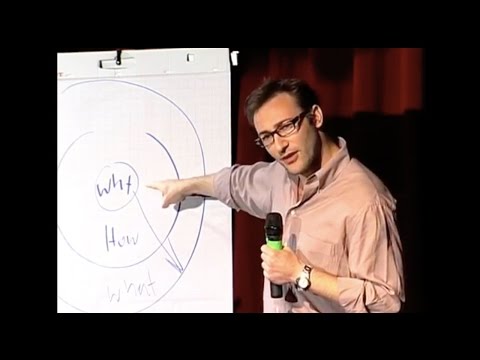
Sinek’ TED Talk based on  START WITH WHY is one of the most watched TED video of all time.

In the book, Sinek highlights purpose-driven leaders such as Dr. Martin Luther King Jr, John F Kennedy, Steve Jobs, The Wright Brothers and companies (Apple, Harley-Davidson, Disney, Southwest Airline) as models of how a purpose can be created to inspire a culture together, away from the manipulative society we live in today.

That is why I never employ an expert in full bloom. If ever I wanted to kill opposition by unfair means I would endow the opposition with experts. They would have so much good advice that I could be sure they would do little work. – Henry Ford

We live in a world of more talk and little substance, a world of life coaches who don’t have their life figured out like anyone is supposed to have it figured out, a world of chefs who cannot cook, motivational speakers who are not motivated, of bloggers without a blog. Everyone is an Expert or Guru in the social media world with the promise of instant results and changes. But the reality of life is that nothing great happens by chance, it takes hard work and consistency to achieve anything worthwhile.

“First people will tell you that you are wrong. Then they will tell you that you are right, but what you’re doing really isn’t important. Finally, they will admit that you are right and that what you are doing is very important; but after all, they knew it all the time. – Jonas Salk, Developer of the Polio Vaccine

An expert is someone with the special skill or knowledge representing mastery of a particular subject. Experts have been at the epicenter of most of our modern civilization and they have also been at the center of unachieved dreams as a result of their lack of discernment. History is filled with stories of so-called experts that made discouraging statements about nascent ideas and innovation. You have got to protect your ideas and dreams from these so-called experts. They come in different forms such as Parents, Friends, Mentors, Colleagues, Acquaintances, Teachers, and even frenemies. Some of them are well-meaning but you need to beware of the experts, they might be wrong.

An expert is someone who knows more and more about less and less until finally, he knows everything about nothing. – Nicholas Butler, American Philosopher.

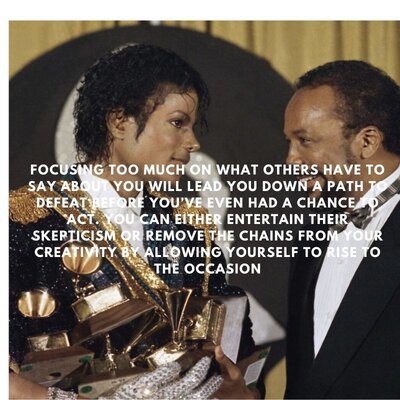
Focusing too much on what others have to say about you will lead you down a path to defeat before you’ve even had a chance to act. You can either entertain their skepticism or remove the chains from your creativity by allowing yourself to rise to the occasion

In his very insightful book, 12 Notes: On Life and Creativity, 80-time Grammy nominee and 8-time Grammy award winner Quincy Jones share a great anecdote about being underestimated, believing in yourself, and ignoring the naysayers. Quincy Jones had earlier pitched Micheal Jackson on producing his solo albums but the record executives at epic records were not enthusiastic about Quincy producing the records.

The executives said:

No way. Quincy’s too jazzy. He’s only done The Brothers Johnson. He’s a jazz arranger and composer.

But in spite of the doubters, naysayers, and the non-cooperation, the collaboration between Quincy Jones and Micheal Jackson led to the following:

  • Off the Wall, sold tens of millions of copies. It became the biggest-selling Black record in history. It also became the first album to generate four American Top 10 hits.
  •  Thriller Album is the bestselling album of all time. Thriller became Jackson’s first number one album on the US Billboard Top LPs & Tapes chart, where it spent a record 37 non-consecutive weeks at number one, from February 26, 1983, to April 14, 1984.
  • Bad Album – Bad debuted at number one on the Billboard Top Pop Albums chart, selling over 2.25 million copies in its first week in the US, and stayed atop for six consecutive weeks. It also reached number one in 24 other countries, including the UK, where it sold 500,000 copies in its first five days and became the country’s best-selling album of 1987.

Quincy writes:

There are numerous instances in which I’ve found power in being underestimated, but one of the most ironic memories is from when I began working with Michael Jackson as the producer of his top three albums, Off the Wall, Thriller, and Bad. Music history might look a bit different if I allowed negative opinions to stand in the way of what I knew I was capable of. But as I said, prematurely boasting only sets you up to look like a fool, so I’ll let you decide what you want to take from the following anecdote.

By the late ’60s, I was getting completely burned out from doing movie scores. I had done thirty-five of them and had both hits and flops. Most composers do one or two a year, but I never did fewer than that. I once did eight! I was moving at an unsustainable pace. I remember often sleeping only three hours a day and running cold water over my wrists to stay awake.

I also had three more kids after Jolie at this point, including Rachel, Tina, and Quincy Jones III, so there weren’t many hours to work with in the day. Simultaneously, film scorers (especially Black film scorers) were at the bottom of the Hollywood food chain, and easily replaceable. It felt as though my value in the industry was constantly hanging by a thread. At the drop of a dime, I could be cut loose. Most important, I wanted to get away from the rigidity of having to write music to pictures.

I longed to get back into the record business and wanted to make albums under my own name, produce for other artists, and facilitate a more free-flowing creative process. I didn’t want to think about any deadlines. I simply wanted to create what gave me goosebumps. In 1969, I signed a deal with Creed Taylor’s Impulse! Records, which was distributed by A&M, and did a good number of albums through the ’70s, including Walking in Space, one of the first jazz-fusion records, Gula Matari, Body Heat, a whole host of projects with The Brothers Johnson, and many more. Toward the end of the ’70s, I was recruited back to film after Sidney Lumet asked me to be the music producer and supervisor for his new movie, The Wiz. I didn’t want to do it, but since Sidney helped me get my first scoring assignment, on The Pawnbroker back in 1964, I couldn’t say no.

Micheal Jackson

I had previously met Michael Jackson when he was only twelve years old, but The Wiz brought us together for our first official collaboration, since he was cast in the role of Scarecrow. When we began rehearsals, Michael was getting ready to do his own album on Epic Records and he asked me to help him find a producer. My plate was pretty full trying to get pre-production for The Wiz going, so I couldn’t even think about it at the time. But over the course of our rehearsals, I came to see that, on top of his otherworldly talents, Michael had a work ethic like I’d never seen before. No matter what, he was always prepared. He ensured that every dance step, line, and lyric was perfected to a T, and even memorized the lines of his co-stars.

In one scene, he was instructed to pull little pieces of paper out of his straw chest. They were filled with proverbs from famous philosophers and he kept mispronouncing Socrates. After three days of mispronouncing his name as “Sow-cray-tees,” and receiving no correction, I pulled him aside during a break and whispered, “Michael, before it becomes a habit, I think you should know that the name is pronounced ‘Sock-ra-tees.’” With the utmost humility, he said, “Really?”

Without even taking a second to think about it, I replied with, “I’d like to take a shot at producing your new record.” His ability to take critique, on top of his work ethic and talent, indicated that he was exactly the kind of artist I would want to work with. He agreed.

No way. Quincy’s too jazzy. He’s only done The Brothers Johnson. He’s a jazz arranger and composer.

Later, when Michael approached his label, Epic Records, about having me produce the album, his A&R reps told him, “No way. Quincy’s too jazzy. He’s only done The Brothers Johnson. He’s a jazz arranger and composer.” It was the same type of response that I’d heard repeatedly over the years. They didn’t know about the extent of my musical background, and they told Michael that Kenny Gamble and Leon Huff should do it. He eventually marched back to Epic with his managers, Freddy DeMann and Ron Weisner, and demanded that I produce his record.

Prove them Wrong

Much to his label’s dismay, they agreed, but didn’t expect much from me. And although they agreed, there wasn’t a whole lot of cooperation. At that point it didn’t matter though, because the ball was left in my court. I knew that I could either meet their low expectations or exceed them. In addition to their doubts about the level of my competency, many also wondered if Michael could make it as a solo artist in his adult years without the support of his brothers.

 I knew that I could either meet their low expectations or exceed them. In addition to their doubts about the level of my competency, many also wondered if Michael could make it as a solo artist in his adult years without the support of his brothers.

I had of course known about his Jackson 5 days, but I was interested in helping him break out of that former persona he was locked into. I wanted to push him beyond just dance music and see how far he could stretch his musicality. I had recently seen him at the Oscars singing “Ben,” a song about a rat (for the film, Ben), which I knew wasn’t going to cut it.

More than anything, I wanted to help him with his artistic development and get him to dig deeper, with no limitations on how far he could go musically. He had all the talent and drive. He did his homework. He just needed some guidance. I tested his creativity from every angle and applied everything I’d learned over the years to help him with his artistic growth, like dropping keys a minor third to give him flexibility and a more mature range in his upper and lower registers. I played around with tempo changes. I wanted to make a pop album that blended elements of R&B, disco rhythms, top-of-the-line arrangements, and, of course, his vocals.

The Dream Team

 I gathered what I called my “Killer Q Posse,” which consisted of Rod Temperton, one of the best songwriters to have ever lived on this planet; Bruce Swedien, the engineer of all engineers; Greg Phillinganes, a virtuosic keyboardist; Jerry Hey, a monster trumpeter and arranger; Louis Johnson, the youngest of The Brothers Johnson; John “J. R.” Robinson, a fellow Berklee alum and the drummer for Rufus; Paulinho Da Costa from Brazil on percussion; and many other great musical talents. Although it was impossible to predict the record’s chances of success, we collectively poured 110 percent into every track and nuance of the album.

 In an attempt to steer Michael toward songs with more depth and emotion than he had ever sung before, I got Stevie Wonder’s “I Can’t Help It,” Paul McCartney’s “Girlfriend,” Tom Bahler’s “She’s Out of My Life” (a track that I was initially going to give to Frank Sinatra!), Rod Temperton’s “Rock With You,” and, of course, “Don’t Stop ’Til You Get Enough.”

Off the Wall Album

Michael did most of his vocals live, with no overdubs. The resulting record, Off the Wall, sold tens of millions of copies. It became the biggest-selling Black record in history. How’s that for being too “jazzy”? Ironically, Epic was about to do a round of layoffs, but Off the Wall saved the jobs of many of the doubters who previously claimed that “Quincy is the wrong guy.” It also became the first album to generate four American Top 10 hits.

Due to the success of Off the Wall, Michael and I went on to record Thriller (which is, as of this writing, still the bestselling album of all time) and Bad.

Lesson Learned from the Experience

The entire experience reinforced the fact that people are always going to have opinions about your qualifications. What really matters is what you do with them. Focusing too much on what others have to say about you will lead you down a path to defeat before you’ve even had a chance to act. You can either entertain their skepticism or remove the chains from your creativity by allowing yourself to rise to the occasion.

I still have to remind myself of this lesson because my being underestimated didn’t stop after Off the Wall, or Thriller, or Bad. In fact, the more ears that heard those albums, the more opinions I had coming at me.

But now, instead of being underestimated for my capabilities, I’m underestimated for my age. People often ask me when I’m going to retire, but my only response is, “I’m just starting. Retired? You take the ‘re’ off of that and it’s ‘tired.’ I’m not tired yet.” If you never leave, you never have to make a comeback, and that’s exactly what I plan on doing. There’s nothing wrong with retiring, especially after you’ve put in decades of hard work, but it’s just not for me. I’m not interested in letting my age dictate my competency.

All the Best in your quest to get Better. Don’t Settle: Live with Passion.

As Sir Roger Bannister, the first man to run a mile in less than four minutes once quipped: “The man who can drive himself further once the effort gets painful is the man who will win.”  Bannister held the record for 46 days before John Landy broke the sub-four-minute mile with a time of 3 minutes 57.9 seconds. The sub-four-minute mile has since been run by 1663 athletes as of April 13, 2021) by runners worldwide.
“The world mile record now stands at 3 minutes 43.13 seconds, set by Hicham El Guerrouj of Morocco in 1999. ”


Exit mobile version