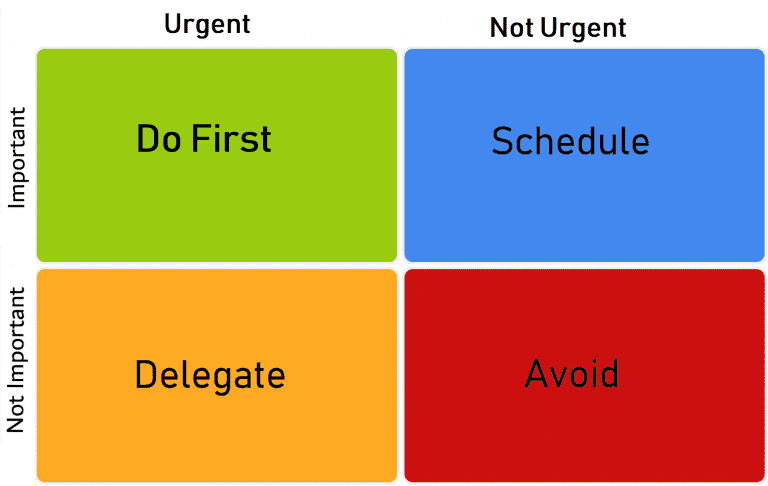
First Things First provides you with a compass, because where you’re headed is more important than how fast you’re going.
Learning to put the first things first is a lesson that most of us learn late or never until it is too late. First things first is a phrase that signifies the need to do the most important things before doing other activities. It is synonymous with the word priority, which is something that is more important than other things and needs to be done or dealt with first. Knowing the first things is a question of your priority, value system, life philosophy and goals. Whenever someone says they don’t have time to read or go to the gym, they announce their priority. To achieve any worthwhile goal, one has to keep the first things first. Exercising should be a priority to give yourself a fighting chance to be alive for a long time. To change the direction of your life, reading, studying and getting things done should be a priority.
Podcast Title: The Mental Health Doctor: “Sitting Is Increasing Your Anxiety!”, Your Phone Is Destroying Your Brain, You May Have ‘Popcorn Brain’!
Podcast: The Diary Of A CEO with Steven Bartlett
Guest: Dr. Aditi Nerurkar, Harvard stress expert. Aditi Nerurkar, MD, MPH is an internal medicine physician, public health expert and medical correspondent with an expertise in stress, resilience and mental health during the Covid-19 pandemic and beyond. She currently serves as the Co-Director of the HMS Clerkship in Community Engagement with former HMS Dean of Students Dr. Nancy Oriol.
Guest Book: Dr. Aditi’s New book, The 5 Resets: Rewire Your Brain and Body for Less Stress and More Resilience.
The big picture is the entire perspective on a situation or issue. The big picture concerns a broader perspective or outlook on current events. Focusing on the big picture is getting more challenging as we are readily distracted by the short-term instant gratification of our internet-powered world. In a micro-wave world where we are more excited about sharing a goal on social media than focusing on the mechanics of actually getting the goals executed.
Knowing when to quit is as important as having the will to keep pushing when the going gets tough. When you are constantly pushing and challenging yourself beyond your comfort zone, there will be points where you feel you’ve gone beyond your breaking point. Not all quits are created equally, as some quits are needed for your overall well-being, while some quits are just a strategy for your brain to justify your excuses or bullshit. It is not a matter of if it is going to get tough, but would you be able to recalibrate your mind to push through the pain? To be an athlete, you must have a higher pain tolerance than non-athletic minds. It is tough training for endurance sports such as marathons, triathlons, ultramarathons and ironmans.
Jay Shetty interviews psychotherapist and New York Times bestselling author Esther Perel, who isrecognized as one of today’s most insightful and original voices on modern relationships.
One of the hallmarks of highly successful people and athletes is going the extra mile. To get the results that the most admired people eventually get, one needs to be somewhat obsessed, dedicated and all in. The top 1% in any society are the people who usually give their all, create their luck, consistently show up daily and embrace the struggle. Knowing the difference between addictions, obsessions, compulsions, and dependencies is very important on the path to becoming successful. I have participated in and finished 15 full marathons in the past two years. I trained consistently to achieve my target goals. Knowing the difference is becoming more critical as there is usually a line between the four terms.
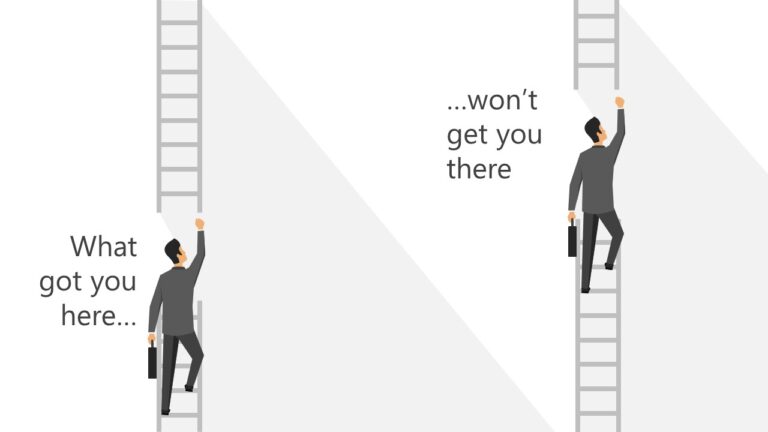
To get what you have never gotten, you have got to do what you have never done. It will require hard work, persistence, mistakes, roadblocks, breakthroughs, and a rollercoaster of ups and downs. The road to success in any endeavour requires going the extra mile, from consistency to intensity, and one might need to become a little bit obsessed. Microsoft co-founder Bill Gates once said, “Success is a lousy teacher. It seduces smart people into thinking they can’t lose.” What got you successful in the first place might be a hindrance to scaling or getting to the next level. Hence the need to stay hungry, curious, teachable, adaptable and flexible. Getting to the top is not the hard part of the success journey, it is staying at the top for a long time that is hard.
“The reasonable man adapts himself to the world: the unreasonable one persists in trying to adapt the world to himself. Therefore all progress depends on the unreasonable man.” ― George Bernard Shaw
In The Brave Athlete: Calm the F*ck Down and Rise to the Occasion, sports psychologist Dr. Simon Marshall and his wife, World Triathlon Cross Championships Lesley Paterson, describe the 13 most common mental conundrums athletes face in their everyday training and races.
Although it might not look so right now, better days are ahead. The world might seem on the verge of armageddon; the funds are low, and the office politics and family drama are not decreasing. Hope is a luxury, but trust me when I say better days are ahead. I have been through my go-through, and all I can say is that the sun will shine tomorrow, you will be fine, and everything will be alright. This is not Pollyanna-speak but a belief that life is to be lived forward cos whatever will go wrong will eventually go wrong. The key to navigating the vicissitudes of life is to keep it moving no matter what.
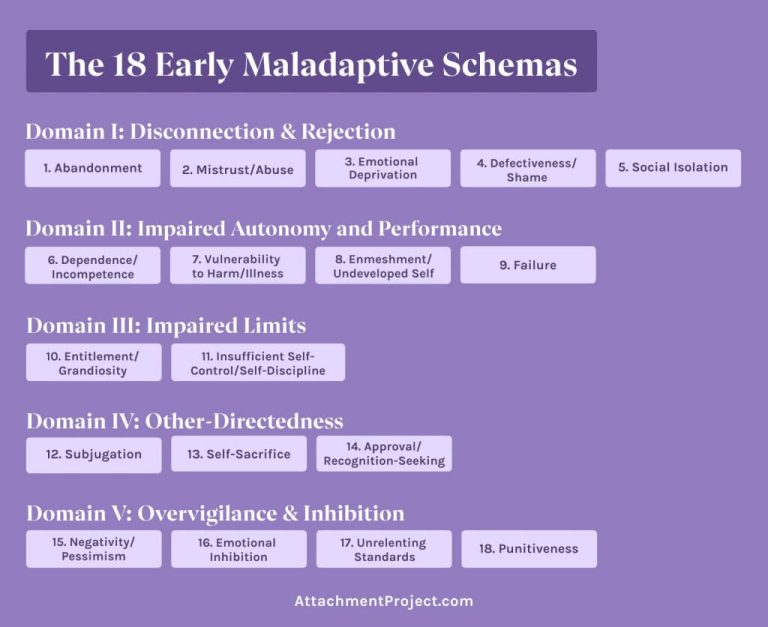
Schema Therapy 1is an integrative model of psychotherapy developed by American psychologist and founder of the Schema Therapy Institute, Jeffrey E. Young that combines proven cognitive and behavioural techniques with other widely practiced therapies. The main goals of Schema Therapy are to help patients strengthen their Healthy Adult mode, weaken their Maladaptive Coping Modes so that they can get back in touch with their core needs and feelings, heal their early maladaptive schemas to break schema-driven life patterns, and eventually to get their core emotional needs met in everyday life.
The 18 Early Maladaptive Schemas are self-defeating, core themes or patterns that we keep repeating throughout our lives.
I used to want to change people through insights, advice-giving, lessons learned, and strategies garnered. But I realized that If I wanted to change anyone, the only person I needed to change was myself. Most of us don’t like being told what to do. We want to buy but we don’t want to be sold to. As author John C. Maxwell puts it “People change when they … Hurt enough that they have to, Learn enough that they want to, and Receive enough that they are able to.” Sometimes the only way we change is when we have hit rock bottom and change is not something we wish for but we have to swim out of the hole or we sink. It is a constant battle to stop myself from giving unsolicited advice. I try to read as much as possible, and the more I know, the more I realize that I still have a lot of work to do.
People change when they hurt enough that they have to change. People change when they learn enough that they want to change. People change when they receive enough that they are able to change. – John C. Maxwell
I have been trying to learn to speak impeccable French since 2011, and I am still not there after a decade-plus of trying. It has been sometimes frustrating, and I often want to give up on the goal. I have tried almost everything to become proficient in my French communication skills. I have attended multiple classes in different formats, including residential (Nigerian French Language Village), formal classroom (daily lesson), watching French movies and documentaries, listening to a French podcast, reading French books, blogging in French, and even moving to a French-speaking city. It’s been a rollercoaster of breaks, progress and grit. The main thing that has made me stay consistent with my French Language learning goal is my WHY.
“Wherever you see a successful person or business, someone once made a courageous decision.”-Peter Drucker
Decision (n.) mid-15c., “act of deciding,” from Old French décision (14c.), from Latin decisionem (nominative decisio) “a decision, settlement, agreement,” noun of action from past-participle stem of decidere “to decide, determine,” literally “to cut off,” from de “off” (see de-) + caedere “to cut” (from PIE root *kae-id- “to strike”). Deciding means to cut off from other options. It is non-negotiable; you have decided where and what you want to do with your life. Making life-changing decisions, especially those not conforming to societal preconceived values, can be tricky. A resolution is a firm decision to do or not to do something. When most of us make New Year’s resolutions, we make a wish that lasts for 4-8 weeks. As the going gets tough, as they would ultimately do, we go back to our old ways.
A resolution is a firm decision to do or not to do something.
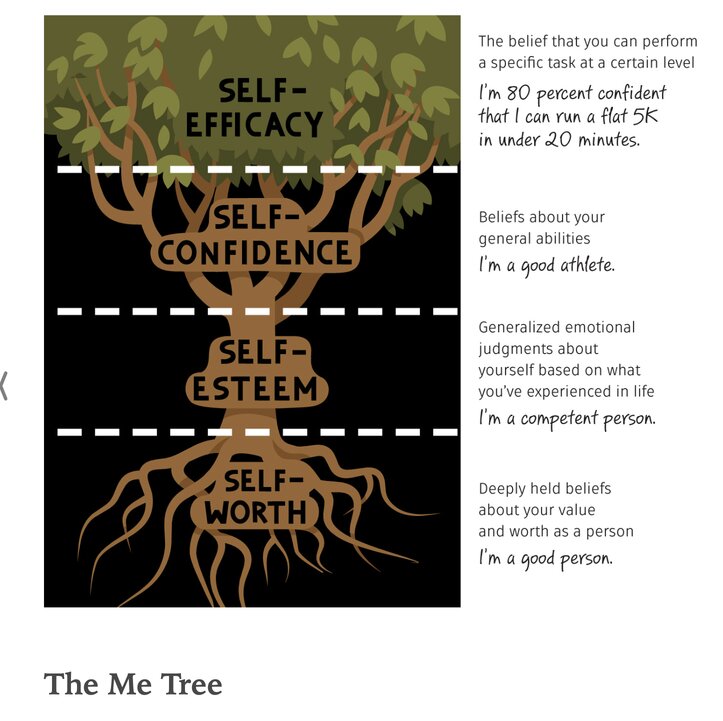
In their book, The Brave Athlete: Calm the F*ck Down and Rise to the Occasion, sports psychologist Dr. Simon Marshall and his wife, World Triathlon Cross Championships Lesley Paterson, describe our self-judgment system using a tree metaphor. The tree comprises a deep root (self-worth), a sturdy trunk (self-esteem), a thick branch (self-confidence) and leaves (self-efficacy).
Our self-judgment systems are hierarchical. The deeper the problem, the more you’re f*cked.
Self-worth – deep roots.
Your self-worth is based on deeply held feelings about your value and worth as a person. It is not about what you do but who you are—your values, morals, passions, and fundamental beliefs about yourself. The extent to which your emotional and psychological needs were met as a kid largely determines your self-worth.
From a young age, we start to express psychological and emotional needs that we are highly motivated to meet: the need for love, security, safety, affirmation, belonging, and so on. If these needs are not met, we try to figure out why. Because our young brains are not capable of analyzing the causes logically and exhaustively, our focus often turns inward. We start to blame ourselves, and the conclusions we settle on are pretty damning: We are not good enough, not worthy enough, not competent enough, and so on. After all, why else would we not get attention, get rejected, or not feel encouraged or protected?
The end result is usually the same: I must be a bad person of little value. The seeds of low self-worth take root. These biased beliefs grow and infect our adult brain like viruses.
A healthy self-worth means that you know your life is valuable and important and that you are loveable. Because self-worth is a relatively stable characteristic of our personality and it affects virtually every self-perception we have, changing it often requires the help of a mental health professional.
Self-esteem – sturdy trunk
Self-esteem is the trunk of the tree because it supports everything above it. Just as a bad root system (low self-worth) can’t create a healthy tree trunk (self-esteem), strong self-esteem is required to support self-confidence (the tree branches). It’s extremely rare to find athletes who are supremely confident but have low self-esteem.
Self-esteem reflects generalized emotional judgments about yourself based on what you believe you’ve experienced, achieved, or accomplished. These “achievements” can be real and tangible (e.g., you’ve done well at school, at work, in sports, etc.) or they can be imagined (e.g., you’ve been told that you’re successful).
Self-confidence – thick branches
Because self-confidence is defined by your perception of your ability, it has a future orientation and predicts what things people will attempt. Self-confidence is the first area in which your self-judgment system can appear differentiated, meaning that you can have strong and weak branches on the same tree. You can have high self-confidence in one area of your life but low self-confidence in another area.
“Even though low confidence can affect other aspects of your life, it rarely affects everything if your underlying self-esteem (tree trunk) is healthy. When you lack self-confidence across the board, the problem is most likely low self-esteem.”
Self-efficacy as leaves
Self-efficacy is a task-specific form of confidence. Technically speaking, self-efficacy refers to your beliefs about your capability of producing a very specific level of performance. Because self-efficacy is situation specific, your confidence to execute a given task may vary depending on the circumstances.
“Self-efficacy is about what you think you can do in very specific tasks, not what you can actually do.”
All the best in your quest to get better. Don’t Settle: Live with Passion.